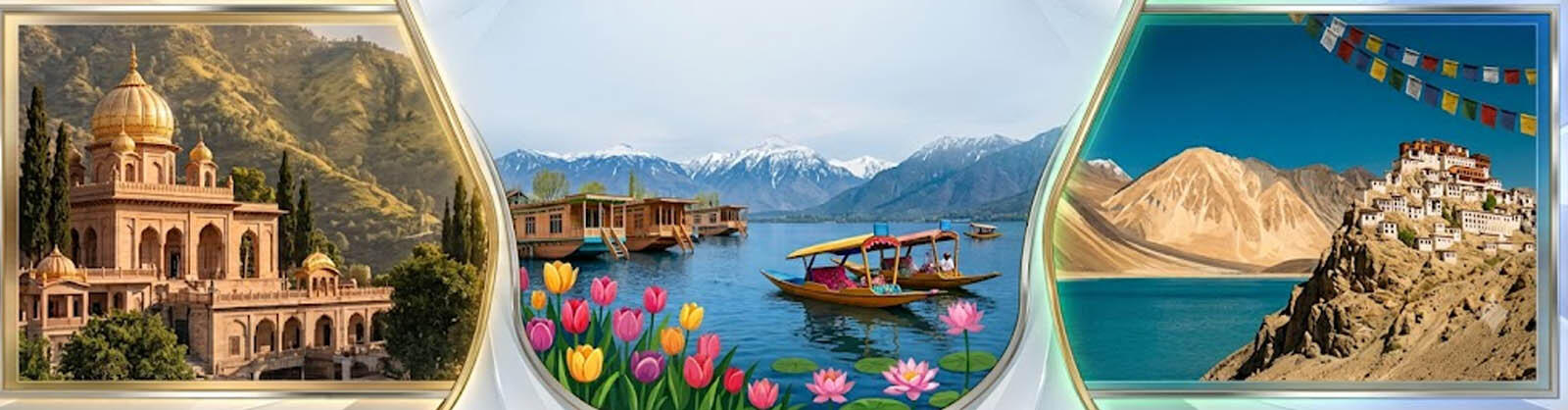
Kashmir is called “Paradise on Earth” because of its breathtaking mountains, green valleys, lakes, rivers, gardens, meadows, snowfall, and beautiful landscapes.
The best time depends on what you want to experience. March to June is excellent for pleasant weather and sightseeing, July to September is good for greener landscapes, and December to February is popular for snow and winter activities.
A 5–7 day trip is suitable for visiting the major destinations such as Srinagar, Gulmarg, Pahalgam and Sonamarg. A longer trip is recommended if you want to explore places such as Gurez, Doodhpathri or Yusmarg.
Popular destinations include Srinagar, Gulmarg, Pahalgam, Sonamarg, Doodhpathri, Yusmarg and Gurez Valley.
Srinagar is famous for Dal Lake, Shikara rides, houseboats, Mughal gardens, Kashmiri handicrafts and traditional Kashmiri cuisine.
Yes. A Shikara ride is one of the most popular experiences in Srinagar. Visitors can enjoy views of the surrounding mountains, houseboats, floating markets and the beautiful waters of Dal Lake.
Gulmarg is famous for its snow-covered mountains, skiing, the Gulmarg Gondola, meadows and scenic Himalayan views. It is particularly popular during winter.
Pahalgam is known for its beautiful valleys, rivers, pine forests and mountain scenery. Betaab Valley, Aru Valley and nearby attractions are popular with visitors.
Sonamarg, meaning “Meadow of Gold,” is famous for its alpine scenery, mountains, glaciers, meadows and access to high-altitude trekking areas.
Yes. Snowfall is commonly associated with the winter months, particularly in higher-altitude areas such as Gulmarg. Exact snowfall depends on weather conditions each year.
Yes. Kashmir is a popular honeymoon destination because of its scenic landscapes, houseboats, Shikara rides, snow-covered mountains, romantic valleys and comfortable resorts.
Yes. Kashmir offers sightseeing, nature experiences, boat rides, gardens, cable-car rides and other activities that can be enjoyed by families. The itinerary can also be adjusted for children and senior citizens.
Kashmir receives tourists throughout the year, but conditions can change. Visitors should follow current government/local advisories, stay informed about weather and road conditions, and follow instructions from local authorities.
The easiest way for many travellers is to fly to Srinagar Airport. Kashmir can also be reached by road, and rail travel can be combined with road transportation depending on the starting point and destination.
You can use the railway network to reach the Kashmir region, but depending on your origin and final destination, you may need to combine train travel with road transportation.
Private taxis and local transportation are commonly used for sightseeing between these destinations. Your tour operator can arrange transportation according to your itinerary.
Depending on the season and location, activities include Shikara rides, skiing, snow activities, trekking, golfing, river rafting, fishing, paragliding and sightseeing.
Pack comfortable clothes, good walking shoes, sunglasses, sunscreen and a light jacket. During colder months, carry thermal wear, warm jackets, gloves, woollen socks and appropriate footwear.
Kashmir is famous for dishes such as Rogan Josh, Yakhni, Dum Aloo, Gushtaba and the traditional Wazwan. Kashmiri Kahwa is also a popular traditional drink.
Wazwan is a traditional Kashmiri multi-course feast featuring several meat-based dishes. It is an important part of Kashmiri culinary and cultural traditions.
Kahwa is a traditional Kashmiri tea usually prepared with green tea, saffron, cardamom and other spices, often served with nuts.
Popular souvenirs include Pashmina products, Kashmiri carpets, handicrafts, papier-mâché items, saffron, dry fruits, spices and traditional embroidered products.
The cost depends on the season, hotel category, transportation, activities and duration of the trip. Budget, standard and luxury options are available.
Yes. Many tour operators offer customizable packages. You can usually adjust the number of days, hotels, destinations, transportation, meals and activities according to your preferences.
Depending on the package, it may include hotel accommodation, meals, transportation, sightseeing and airport/railway transfers. Always check the inclusions and exclusions before booking.
Yes, especially if you’re travelling during peak summer, winter snowfall periods, holidays or festivals. Booking in advance generally gives you more choice in hotels and room types.
It isn’t necessary, but it is a unique experience. Staying on a traditional houseboat on or around Dal Lake can be a memorable part of a Srinagar visit.
Yes. However, the itinerary should be planned around their mobility, weather tolerance and altitude. A relaxed itinerary with comfortable transportation and fewer long journeys is generally preferable.
Yes. Children can enjoy activities such as Shikara rides, sightseeing, gardens, snow experiences and cable-car rides. Parents should plan appropriate clothing and avoid overly strenuous activities.
Yes. Kashmir offers a variety of adventure activities, including skiing, trekking, rafting, paragliding, mountaineering and fishing, depending on the destination, season and applicable regulations.
Winter is the main skiing season in Gulmarg, but actual conditions depend on snowfall and weather. Check current conditions before planning a skiing trip.
Yes. You can combine destinations in the Jammu and Kashmir regions into one itinerary. For example, a trip can include Jammu/Katra followed by Srinagar, Gulmarg and Pahalgam.
Yes. A popular combination is Katra/Vaishno Devi + Srinagar + Gulmarg + Pahalgam, although the number of days required depends on your itinerary.
It is advisable to carry some cash, particularly when visiting remote areas. Card and digital payment availability can vary between locations and businesses.
Mobile and internet connectivity is available in many populated and tourist areas, but connectivity can be weaker or unavailable in some remote and mountainous locations.
Road conditions can be affected by snowfall, landslides, rain and other weather conditions. Always check the latest road and weather situation before travelling.
Yes. Kashmir can be visited during the monsoon period, but rainfall can occasionally affect road conditions. Check the forecast before travelling, particularly if your itinerary includes mountain roads.
Carry a valid government-issued photo ID and your travel/hotel booking details. International visitors should also carry the documents required for entry into India and any applicable permits.
Combine famous attractions with local experiences—take a Shikara ride, stay on a houseboat, explore Kashmiri food and handicrafts, visit the valleys and meadows, and leave enough time to enjoy the scenery rather than rushing between destinations.
Its combination of mountains, lakes, valleys, snow, culture, food, adventure, hospitality and natural beauty makes Jammu & Kashmir an attractive destination for families, couples, solo travellers and adventure enthusiasts.